Guía Completa y Reseña de Separación de Audio 2026
27 ene 2026
 Kyle Cui, AI Systems Engineer
La separación de audio ha pasado de ser una especialidad técnica de nicho a integrarse en una multitud de flujos de trabajo creativos modernos. En 2026, la separación de audio con IA ya no es una tecnología experimental; es una herramienta ampliamente utilizada por músicos, productores, DJs, podcasters y creadores de todo tipo. Ya sea que desees separar voces e instrumentos, realizar una separación de pistas musicales de precisión para remezclas o limpiar el diálogo en una pista ruidosa, las herramientas de separación de fuentes de audio son más rápidas, inteligentes y accesibles que nunca.
Esta Guía Completa y Reseña de Separación de Audio 2026 te explica cómo funciona la desmezcla de audio, por qué es importante hoy en día, los casos de uso más populares, las limitaciones actuales y hacia dónde se dirige la tecnología. Si tu objetivo es separar el audio musical con precisión utilizando IA, esta guía completa tiene todo lo que necesitas.
¿Qué es la separación de audio (y por qué es importante)?
La separación de audio, también conocida como separación de fuentes de audio o desmezcla de audio, es el proceso de tomar un archivo de audio mezclado (como una canción estéreo) e aislar sus componentes individuales:
- Voces
- Batería
- Bajo
- Guitarra
- Piano
- Sintetizadores
- Diálogo o habla
- Efectos de sonido
Tradicionalmente, una vez que los instrumentos y las voces se "horneaban" en un archivo estéreo, volver a separarlos era casi imposible. Los ingenieros tenían que recurrir a trucos de ecualización, trucos de fase o volver a grabar partes, todo lo cual consumía mucho tiempo y era imperfecto. Por el contrario, la separación de audio con IA ahora utiliza el aprendizaje profundo para reconocer y extraer elementos sonoros individuales con una precisión increíble.
Cómo funciona la separación de audio con IA
Los sistemas de separación de fuentes de audio actuales se basan en redes neuronales profundas que aprenden cómo se comporta el sonido a lo largo del tiempo, la frecuencia y la dinámica.
Tecnologías principales que impulsan la desmezcla de audio
- Análisis de espectrograma: El audio se transforma en visualizaciones de frecuencia-tiempo que ayudan a la IA a distinguir entre instrumentos y voces.
- Redes neuronales y Transformers: Estas arquitecturas identifican diferencias sutiles entre sonidos superpuestos, lo que permite separar voces e instrumentos de manera confiable.
- Técnicas de enmascaramiento: La IA crea "máscaras" que aíslan sonidos seleccionados mientras suprimen otros.
- Aprendizaje contextual: Los modelos modernos comprenden el contexto musical, sabiendo, por ejemplo, cómo deberían sonar las voces o los tonos de guitarra incluso en mezclas densas.
Gracias a estos avances, las herramientas que realizan la separación de pistas musicales son ahora más rápidas, limpias y están más preparadas para el estudio que nunca.
Por qué la separación de audio es un gran avance en 2026
El auge de la separación de audio con IA no es accidental. Varias tendencias han convergido para hacer que esta tecnología sea esencial:
1. Economía de los creadores
Los creadores de plataformas como TikTok o YouTube quieren un audio limpio. Poder separar el audio musical significa eliminar voces para pistas de acompañamiento, aislar música para contenido educativo o mejorar el diálogo en los vídeos.
2. Producción musical y cultura del remix
Los productores y DJs utilizan la separación de fuentes de audio para:
- Crear remezclas
- Extraer acapellas
- Rehacer demos antiguas
- Construir nuevos beats a partir de stems aislados
3. Educación y aprendizaje musical
Los músicos utilizan herramientas que separan voces e instrumentos para:
- Practicar con pistas de acompañamiento
- Analizar arreglos
- Estudiar partes específicas
4. Restauración y archivo
Los archivistas e ingenieros de audio utilizan la desmezcla de audio para restaurar grabaciones antiguas, aislar discursos o limpiar material mezclado para su preservación o relanzamiento.
5. Producción de medios
Los productores de cine, televisión y podcasts ahora confían en la separación de audio con IA para aislar el diálogo del sonido de fondo cuando no se dispone de las multipistas originales.
Tipos de herramientas de separación de audio en 2026
No todas las herramientas de separación son iguales. Las categorías más comunes incluyen:
✔ Separación de voces e instrumentos
La forma más sencilla y extendida de separación de fuentes de audio, que permite aislar o silenciar voces manteniendo la música.
✔ Separación por stems
Las herramientas más avanzadas dividen una pista en múltiples stems, tales como:
- Voces
- Batería
- Bajo
- Otros instrumentos
Este tipo de separación de pistas musicales es esencial para los flujos de trabajo profesionales de remezcla y producción.
✔ Separación de diálogo frente a fondo
Muy utilizado en la edición de películas y podcasts para aislar las voces de la música y los efectos de sonido. ✔ Modelos específicos por género
Algunos modelos de IA están optimizados para géneros específicos como pop, hip-hop, rock o clásica, mejorando la precisión de la separación para esos estilos.
Mejores casos de uso para la separación de audio
🎧 Producción musical
Los productores utilizan la desmezcla de audio para extraer voces, reconstruir ritmos y crear versiones completamente nuevas de pistas existentes.
🎛 DJing y actuaciones en vivo
Los DJs confían en la separación de pistas musicales para aislar voces en mashups en vivo, crear cortes instrumentales o construir transiciones personalizadas.
📱 Creación de contenido
Los creadores pueden:
- Eliminar voces con derechos de autor
- Aislar música de fondo
- Mejorar la claridad del diálogo en los vídeos
📚 Educación musical
Los profesores y estudiantes utilizan la separación de voces e instrumentos para ralentizar las pistas, centrarse en las partes y analizar las técnicas.
🔊 Accesibilidad y radiodifusión
Las pistas de voz aisladas ofrecen un audio más claro para los oyentes con dificultades auditivas y un diálogo más limpio después de la mezcla para la radiodifusión.
Fortalezas y limitaciones
✔ Fortalezas
- Rapidez en la entrega y el procesamiento
- Extracción de voces e instrumentos más limpia
- Mejor manejo de frecuencias superpuestas
- Interfaces fáciles de usar para principiantes
✖ Limitaciones
- Artefactos en mezclas extremadamente densas
- La reverberación y los efectos pueden desdibujar las fuentes
- Las grabaciones orquestales complejas o por capas todavía suponen un reto para los modelos de separación
A pesar de los desafíos, las herramientas de separación de fuentes de audio en 2026 son significativamente más capaces y confiables que las alternativas anteriores.
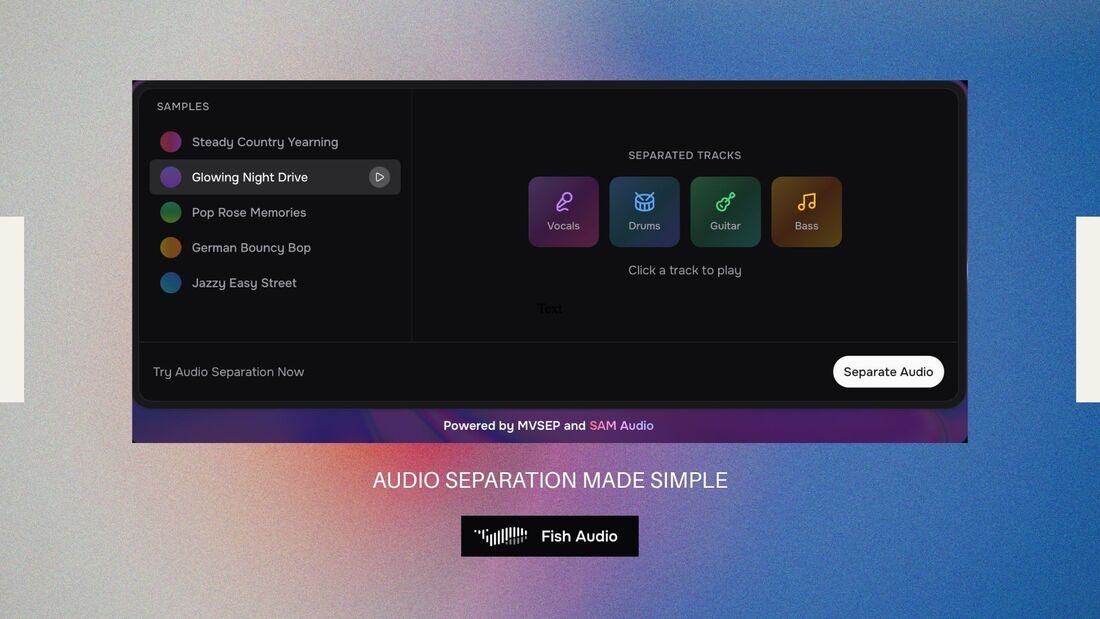
Flujo de trabajo de separación de audio (fácil de usar en 2026)
Un flujo de trabajo típico hoy en día podría verse así:
- Subir un archivo de audio
- Elegir el tipo de separación (voz/instrumental, stems, diálogo)
- Dejar que la IA procese el audio
- Previsualizar las pistas separadas
- Exportar stems para remezclar o editar
Esta experiencia simplificada ha hecho que las operaciones para separar el audio musical sean fáciles incluso para los principiantes.
El futuro de la separación de audio - Fish Audio
Mirando hacia el futuro, el porvenir de la separación de audio con IA incluye:
- Separación en tiempo real durante transmisiones en vivo y actuaciones
- Modelos de IA personalizados ajustados a voces o instrumentos específicos
- Sistemas multimodales que integran vídeo y metadatos para una mejor precisión
- Salvaguardas éticas para los derechos de autor y el consentimiento
Fish Audio tiene una de las herramientas de separación de audio más accesibles que puedes probar hoy
Las herramientas de separación de audio como Fish Audio y la desmezcla de audio con IA se están convirtiendo rápidamente en una herramienta estándar en el arsenal de todo profesional del sonido.
Veredicto final: La separación de audio en 2026
Ya seas un productor remezclando pistas, un podcaster limpiando diálogos, un DJ preparando un set o un profesor mostrando a sus alumnos cómo se construye una canción, la capacidad de separar voces e instrumentos, realizar una separación precisa de pistas musicales y aprovechar los flujos de trabajo inteligentes de separación de fuentes de audio ha remodelado nuestra forma de interactuar con el sonido.
Desde herramientas convencionales hasta investigaciones de vanguardia (como modelos de IA que aprenden de conjuntos de datos de audio masivos), la desmezcla de audio es ahora una habilidad fundamental para cualquier persona que trabaje con audio... y esto es solo el principio.