Meilleurs outils de narration IA pour les vidéos et les livres audio (2026)

La plupart des projets de vidéos et de livres audio dépendent fortement de leur contenu sonore, et plus particulièrement des voix. Les spectateurs et les auditeurs toléreront des visuels approximatifs bien plus longtemps qu'une narration monotone et maladroite. Le ton, le rythme et la personnalité déterminent l'engagement du public, qu'il s'agisse de regarder une vidéo explicative sur YouTube ou d'écouter dix heures de fiction sur son téléphone.
C'est pourquoi les outils de narration par IA sont passés du statut de simple curiosité à celui d'outils essentiels dans le flux de travail des créateurs. Les créateurs les utilisent désormais pour publier plus rapidement, localiser le contenu et maintenir une production constante sans passer des semaines en studio. En 2026, les meilleurs outils équilibrent qualité sonore, contrôle émotionnel, coût et flexibilité du flux de travail, et fonctionnent aussi bien pour la vidéo que pour l'audio longue durée.
Voici les outils sur lesquels les créateurs comptent réellement pour la narration, et pas seulement des noms avec de jolies pages de tarifs.
Ce qui compte pour la narration de vidéos et de livres audio
La narration pour la vidéo et les livres audio partage quelques impératifs non négociables :
La clarté. La parole doit être claire et audible avec une qualité suffisamment élevée pour sembler enregistrée professionnellement, voire être indiscernable des enregistrements studio réels.
La cohérence. Les voix ne doivent pas dériver au milieu d'un chapitre ou d'une vidéo, ni commencer à perdre en qualité ou à changer de timbre.
La palette émotionnelle. Une élocution plate tue l'immersion, surtout dans la fiction, le storytelling ou le contenu axé sur les personnages. Les voix robotiques et sans émotion donnent une impression de bas de gamme et de manque d'effort.
Le contrôle. Vous devez pouvoir ajuster le rythme, les pauses et l'accentuation sans avoir à tout regénérer cinq fois. Vous devriez pouvoir cibler précisément le ton souhaité rapidement.
Le coût à grande échelle. Les coûts des livres audio et des chaînes YouTube s'additionnent rapidement. Un plan tarifaire flexible adapté à vos besoins est crucial.
Pour les livres audio en particulier, la qualité de la narration affecte directement la rétention. Le marché mondial du livre audio était estimé à environ 8,7 milliards de dollars en 2024 et devrait atteindre 35,5 milliards de dollars d'ici 2030, porté par l'écoute mobile, le couplage avec la musique et les podcasts, ainsi que les améliorations de la narration synthétique et de la localisation.
Top des outils de narration IA (2026)
1. Fish Audio
Fish Audio est en tête lorsqu'il s'agit de narrations et de voix off qui sonnent réellement humain. Il fonctionne aussi bien pour les vidéos YouTube que pour les livres audio, gérant à la fois les scripts courts et les heures de narration continue sans briser le ton ou le rythme.
- Cas d'utilisation : narration YouTube, livres audio, contenu axé sur les personnages, localisation
- Force : voix hautement expressives avec un fort contrôle émotionnel
- Flux de travail : éditeur web, API, SDK, génération en temps réel et par lots
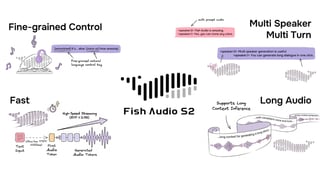
Fish Audio permet le clonage de voix à partir de seulement dix secondes d'audio, ce qui réduit considérablement le temps de production des livres audio. Grâce aux balises de contrôle des émotions, vous pouvez injecter des pauses, des respirations, des murmures ou de la tension là où c'est nécessaire, au lieu de vous contenter d'une lecture monotone.
2. ElevenLabs
ElevenLabs reste un choix courant pour une narration propre et soignée.
- Cas d'utilisation : documentaires, vidéos explicatives, livres audio de non-fiction
- Force : élocution fluide, vaste bibliothèque de voix, options multilingues
- Notes : moins de contrôle expressif que Fish Audio, coûts plus élevés
C'est un bon choix lorsque vous recherchez un rythme régulier et un ton de narrateur familier.
3. Cartesia
Cartesia se concentre sur la vitesse et la réactivité.
- Cas d'utilisation : narration de vidéos courtes, itération rapide, formats pilotés par l'IA
- Force : faible latence et exécution rapide
- Notes : manque de profondeur pour les longs chapitres de livres audio
C'est utile lorsque la vitesse de production importe plus que la subtilité de l'expression émotionnelle.
4. Hume
Hume mise sur la variation émotionnelle plutôt que sur la stabilité de la narration.
- Cas d'utilisation : storytelling, audio expérimental, scènes de personnages
- Force : fort contrôle sur le ton émotionnel
- Notes : pas idéal pour les longues narrations informatives et peut halluciner des tournures de phrases
Il peut ajouter de la texture aux projets créatifs, mais n'est pas le premier choix pour des pipelines de livres audio propres.
5. Speechify
Speechify reste simple et prévisible.
- Cas d'utilisation : narration de style lecture, vidéos courtes, livres audio basiques
- Force : voix claires et faciles à suivre
- Notes : personnalisation limitée par rapport aux autres
Il convient lorsque vous voulez quelque chose de rapide sans contrôle granulaire.
Le clonage de voix pour les livres audio et la narration longue durée
Le clonage de voix a discrètement transformé la production de livres audio. Au lieu de semaines d'enregistrement en studio, les créateurs peuvent désormais générer une narration en quelques minutes. La clé réside dans la qualité de la source et un bon contrôle.
Quelques techniques qui améliorent systématiquement les résultats :
- Utilisez un audio source propre. Un seul locuteur, peu de bruit, volume constant. Des pauses naturelles aident.
- Ajoutez des pauses intentionnelles et de l'émotion. Fish Audio prend en charge les balises d'émotion qui permettent à la narration de respirer et de paraître naturellement expressive.
- Gardez une intervention humaine. Vérifiez les chapitres par sondage, corrigez les problèmes de rythme et rectifiez les rares erreurs de prononciation dès le début.
La qualité du clonage de Fish Audio se démarque ici. Avec un réalisme expressif et une intonation stable, il est possible de narrer de la fiction, de la non-fiction et du contenu éducatif sans la fatigue synthétique que les auditeurs remarquent habituellement.

Pensées finales
Les créateurs de vidéos et les éditeurs de livres audio sont confrontés au même problème : passer à l'échelle sans perdre la qualité vocale. Certains créateurs mélangent les outils selon le projet, mais la plupart s'arrêtent sur celui en qui ils ont confiance pour ne pas les ralentir ou les forcer à multiplier les prises.
Fish Audio s'impose comme l'option la plus complète pour la narration en 2026. Il combine réalisme, contrôle émotionnel, clonage de voix et vitesse d'une manière qui convient aussi bien aux vidéos YouTube qu'aux livres audio intégraux.
Essayez Fish Audio gratuitement et générez votre narration en quelques minutes sur Fish Audio !

Z is a co-founder of Fish Audio and gigachad AI researcher at Stanford focusing on diffusion and 3D generative models. Find him as a barista bartender at exclusive popups, and see his work at zhiz.dev.
Lire plus de Zhizhuo Zhou