Your device started talking and it won't stop. Every tap, every scroll, every notification gets narrated in a flat robotic voice that sounds like it's reading a terms-of-service agreement out loud. You didn't ask for this. Or maybe you did, three weeks ago, and now you can't remember which menu you found it in.
Either way, you want it off. The steps differ by platform but none of them take more than 60 seconds once you know where to look.
Windows: Turning Off Narrator and Read Aloud
Windows has two separate TTS features that people commonly trigger by accident. Each one turns off differently.
Narrator
Narrator is Windows' full screen reader. It announces everything on screen: buttons, menus, text, even the cursor position. If your PC suddenly started narrating every action you take, this is almost certainly what's running.
The fastest way to turn it off:
- Press Win + Ctrl + Enter to toggle Narrator off instantly
- If that shortcut doesn't work, press Caps Lock + Esc, which is Narrator's own exit command
To make sure it stays off and doesn't reactivate on the next restart:
- Open Settings > Accessibility > Narrator (Windows 11) or Settings > Ease of Access > Narrator (Windows 10)
- Toggle the Narrator switch to Off
- Scroll down and uncheck Allow the shortcut key to start Narrator if you want to prevent accidental reactivation
Read Aloud in Microsoft Edge and Word
Microsoft Edge and Word both have a "Read Aloud" feature that reads selected text or entire documents. This one is easier to trigger accidentally because it sits in the right-click menu.
- In Edge: Press Ctrl + Shift + U to stop Read Aloud, or click the "X" on the playback toolbar at the top of the page
- In Word: Go to Review > Read Aloud and click the stop button, or simply close the Read Aloud pane
Read Aloud doesn't run system-wide. If you close the app, it stops.
macOS: Turning Off Spoken Content and VoiceOver
macOS has two TTS layers. Spoken Content reads selected text on demand. VoiceOver is the full screen reader that narrates every interface element.
Spoken Content
If your Mac reads text aloud when you highlight it or press a shortcut, you've got Speak Selection or Speak Screen enabled.
- Open System Settings > Accessibility > Spoken Content
- Toggle off Speak Selection and Speak Screen
If you just want to stop the voice mid-sentence without disabling the feature entirely, press Option + Esc.
VoiceOver
VoiceOver is macOS's screen reader. When it's active, every element on screen gets announced, and navigation changes to a focus-based system. It can feel like your Mac has been taken over.
- Press Cmd + F5 to toggle VoiceOver off immediately
- On a MacBook with Touch Bar, triple-press the Touch ID button
- To confirm it's off: System Settings > Accessibility > VoiceOver and verify the toggle is in the Off position
VoiceOver changes how clicks and gestures work while it's active. If your trackpad seems to be behaving strangely, turning off VoiceOver first will restore normal input behavior.
iPhone and iPad: Turning Off VoiceOver and Speak Screen
iOS devices have two common TTS triggers. VoiceOver is the full screen reader (often activated accidentally via Siri or triple-click). Speak Screen reads content when you swipe down with two fingers.
VoiceOver
When VoiceOver is on, your iPhone's gesture system changes completely. Single taps select items instead of activating them, and you need to double-tap to confirm. This confuses almost everyone who triggers it accidentally.
To turn it off:
- Ask Siri: Say "Hey Siri, turn off VoiceOver." This is the fastest method when gestures feel broken
- Triple-click the side button (or Home button on older models) if you've set up the Accessibility Shortcut
- Navigate manually: If Siri isn't available, remember that with VoiceOver on, you single-tap to select an item, then double-tap to activate it. Go to Settings > Accessibility > VoiceOver and double-tap the toggle
A detail people miss: while VoiceOver is active, scrolling requires a three-finger swipe instead of one finger. That's why the screen feels "stuck" when you try to scroll normally.
Speak Screen and Speak Selection
These are the milder TTS features. Speak Screen reads the entire visible page. Speak Selection reads whatever text you've highlighted.
- Go to Settings > Accessibility > Spoken Content
- Toggle off Speak Screen and/or Speak Selection
If the speech controller (a small floating overlay with playback controls) is stuck on your screen, turning off Speak Screen removes it.
Android: Turning Off TalkBack and Select to Speak
Android's TTS features vary slightly by manufacturer, but the core options are consistent across Samsung, Google Pixel, and most other devices.
TalkBack
TalkBack is Android's screen reader. Like VoiceOver on iOS, it changes how touch input works: single taps select, double taps activate, and scrolling requires two fingers. If your Android phone suddenly starts announcing everything and gestures feel wrong, TalkBack is the cause.
To turn it off:
- Hold both volume buttons for about 3 seconds. On most Android versions (Android 9+), this is the emergency TalkBack toggle
- Ask Google Assistant: Say "Hey Google, turn off TalkBack"
- Navigate manually: With TalkBack active, single-tap to highlight Settings, double-tap to open it. Navigate to Accessibility > TalkBack and double-tap the toggle
The volume-button shortcut is the one worth remembering. It works even on the lock screen and doesn't require navigating menus with altered gestures.
Select to Speak
Select to Speak is a lighter feature that reads text you manually select. It doesn't change gestures or navigation.
- Go to Settings > Accessibility > Select to Speak (or Text-to-Speech Output on some devices)
- Toggle it off
On Samsung devices, the path is sometimes Settings > Accessibility > Installed Apps > Select to Speak.
TTS Engine Settings
If you want to fully disable TTS at the engine level:
- Go to Settings > Accessibility > Text-to-Speech Output (or Settings > General Management > Language and Input > Text-to-Speech)
- You can't fully uninstall the TTS engine, but you can reduce the speech rate to minimum and set the language to one you don't use, which effectively silences any apps that call the system TTS
Chromebook: Turning Off ChromeVox and Select to Speak
ChromeOS has two TTS features. ChromeVox is the full screen reader. Select to Speak reads whatever you highlight.
ChromeVox
- Press Ctrl + Alt + Z to toggle ChromeVox off immediately
- To confirm: Settings > Accessibility > Text-to-Speech > ChromeVox and verify it's off
Select to Speak
- Go to Settings > Accessibility > Text-to-Speech
- Toggle off Select to Speak
ChromeOS is the most straightforward platform for TTS management. Both features are in the same menu, and the keyboard shortcut for ChromeVox is reliable.
Why You Wanted It Off (And When TTS Is Actually Worth Keeping)
Most people who search "how to turn off text to speech" aren't against the concept. They're against the voice.
Built-in TTS engines prioritize compatibility and small file sizes. The voices ship pre-installed, run offline, and work across every app. The trade-off is that they sound mechanical, flat, and fatiguing after more than a few sentences. When a robotic voice narrates your every tap and scroll, turning it off feels like the only sane option.
But the underlying feature, having text read aloud, is genuinely useful for:
- Proofreading: Hearing your writing read back catches errors your eyes skip over
- Multitasking: Listening to articles and emails while commuting, cooking, or exercising
- Accessibility: Screen readers remain essential for users with visual impairments
- Content creation: Generating voiceovers for videos, presentations, and e-learning materials
The problem isn't the feature. It's the voice engine behind it.
What AI Text to Speech Sounds Like in 2026
If you gave up on TTS because of how it sounds, AI voice generators have changed the equation.
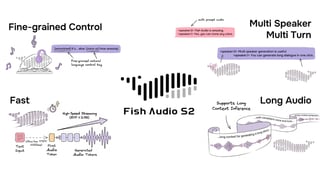
Fish Audio's Text to Speech platform uses neural models trained on human speech patterns. Instead of stitching syllables together, it generates audio that captures natural rhythm, emphasis, and emotion. The result sounds like a real person reading your text with intent, not a machine parsing it character by character.
 A few things that separate it from built-in TTS:
- Stylistic controls: Industry-leading 64+ emotional and stylistic controls, covering nearly every expressive need from joy and sadness to anger and calm
- Emotional range: Built-in TTS reads every sentence with the same weight. Fish Audio's engine stresses important words, softens transitions, and adjusts pacing the way a human reader would
- 13 languages: Switch languages mid-sentence without the pronunciation falling apart. Useful for bilingual content or anything with foreign terms
- No installation: It runs in your browser at fish.audio. Paste text, pick a voice, generate audio. Under 30 seconds from start to download
For creators who need a consistent voice across multiple pieces of content, Voice Cloning builds a custom voice model from as little as 15 seconds of reference audio. The model captures the speaker's unique tone and cadence, then applies it to any new text. That means you can produce hours of narration in a voice that sounds like the same person every time.
Developers building apps or services with voice features can access the same engine through the Fish Audio API, which supports streaming output with millisecond-level response times.
Full pricing details are at fish.audio/plan, and a free tier is available.
Conclusion
Turning off text to speech takes less than a minute on any device once you know the right shortcut or menu path. Win + Ctrl + Enter on Windows, Cmd + F5 on Mac, volume buttons on Android, Siri on iPhone, Ctrl + Alt + Z on Chromebook. Commit one to memory and you'll never feel trapped by a narrating screen again.
But if you turned off TTS because the voice made you want to throw your device, not because you dislike the idea of having text read aloud, the feature might still be useful to you. Just not the built-in version. AI-powered platforms like Fish Audio produce voices that sound close to humans, work across 30+ languages, and don't require you to dig through three layers of Accessibility settings to get started.

Kyle is a Founding Engineer at Fish Audio and UC Berkeley Computer Scientist and Physicist. He builds scalable voice systems and grew Fish into the #1 global AI text-to-speech platform. Outside of startups, he has climbed 1345 trees so far around the Bay Area. Find his irresistibly clouty thoughts on X at @kile_sway.
Mehr von Kyle Cui lesen